 how-to
Can I Lease 8 Year Old Equipment? Absolutely.
Table of Contents
- Can You Lease 8 Year Old Equipment? The Short Answer
- Used Equipment Financing Requirements Lenders Actually Check
- Equipment Appraisal for Leasing: What Lenders Need to See
- Private Seller Equipment Financing: What Changes
Last Updated: August 19, 2026
Can You Lease 8 Year Old Equipment? The Short Answer
Yes, you can lease 8 year old equipment, but the process differs from financing new machinery. At LeaseDirect, we work with businesses across Canada financing used assets, including equipment well past its original warranty period. Age alone rarely kills a deal. What matters far more is the equipment's condition, remaining useful life, and how the numbers stack up for our Credit people.
A lease is a financing arrangement where we purchase the asset and you make fixed monthly payments over an agreed term, with options to buy, return, or renew at the end. For older equipment, we assess whether the asset will hold its value through the lease term. An eight-year-old excavator in excellent working order with documented maintenance history is a very different proposition from the same machine with no service records and visible wear. Your judgement also comes into play. Perhaps you have mechanical skills? Can you maintain equipment you already own? What does your fleet look like? Good operators with hands-on skills and good credit can acquire almost anything they want.
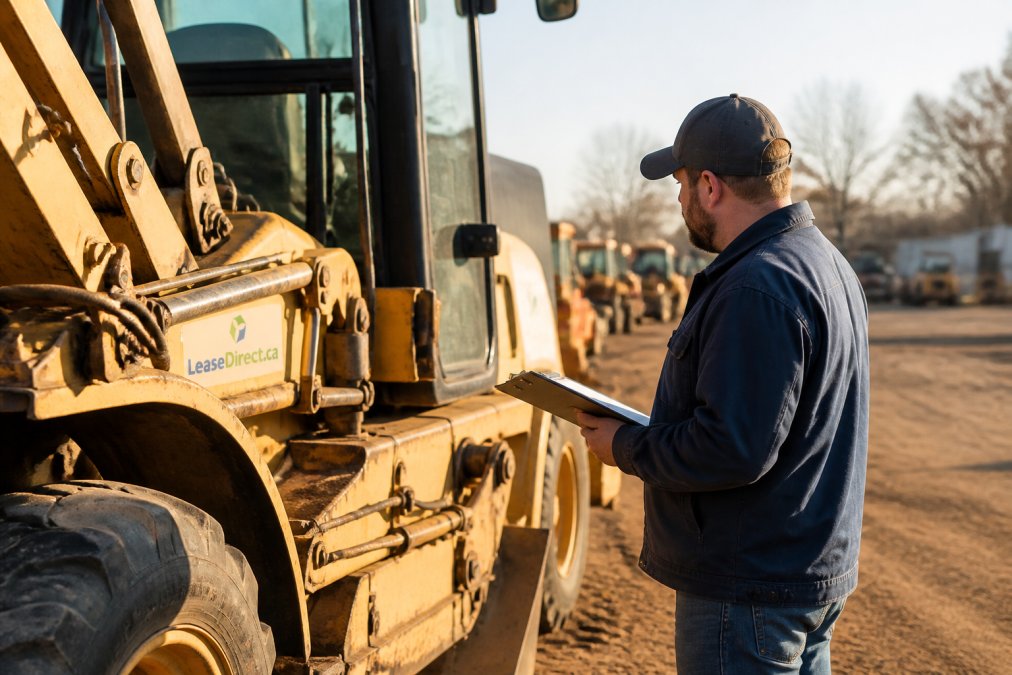
Equipment age matters less than asset lifespan. Heavy equipment built to run for 25 years is still a strong financing candidate at year eight. A light-duty vehicle with a 10-year lifespan is a much harder sell at the same age. Our Credit folks think in terms of remaining useful life relative to the proposed lease term, not calendar years alone.
Factor | Impact on Approval | What Our Credit People Look For |
|---|---|---|
Equipment age | Low | Age relative to expected lifespan |
Condition and maintenance history | High | Service records, inspection results |
Residual value at lease end | Moderate | Remaining value at term completion. |
Lease-to-value ratio | High | Purchase price vs. appraised value. |
Business credit profile | High | Credit bureau inquiry, payment history |
Equipment type | Moderate | Asset class and secondary market demand |
Every equipment lease involves a credit bureau inquiry. There is no way around this. On used equipment our Credit people need to assess your business and personal credit profile before extending a commercial lease financing offer.
Used Equipment Financing Requirements Lenders Actually Check
LeaseDirect approaches used equipment lease financing with a checklist that goes well beyond the machine's age.
Equipment eligibility criteria typically include:
- Remaining useful life must exceed the proposed lease term (we generally want assurance of at least 12-18 months of useful life beyond the final payment)
- The asset must be identifiable and registrable; serial numbers, VIN plates, and title documentation are non-negotiable
- Equipment must have a functioning secondary market
- Maintenance records demonstrating the asset has been properly serviced
Business and credit requirements typically include:
- A formal credit bureau inquiry on the business (and usually the principal)
- Minimum time in business, commonly 12-24 months
- Demonstrated ability to service the monthly payment from operating cash flow. Do you have a contract letter? A regular client list?
- Financial statements can be helpful; we often work from bank statements alone, especially for smaller deals
According to the Canadian Finance and Leasing Association's industry guidelines, equipment financing decisions are based on a combination of asset quality and borrower creditworthiness.
Gather your maintenance records, get a sense of the equipment's current fair market value, and be ready to explain how the asset generates revenue for your business.
Equipment Appraisal for Leasing: What We Need to See
An equipment appraisal is a formal assessment of an asset's current market value. For older equipment, it is often a required step to get to a commercial lease approval.
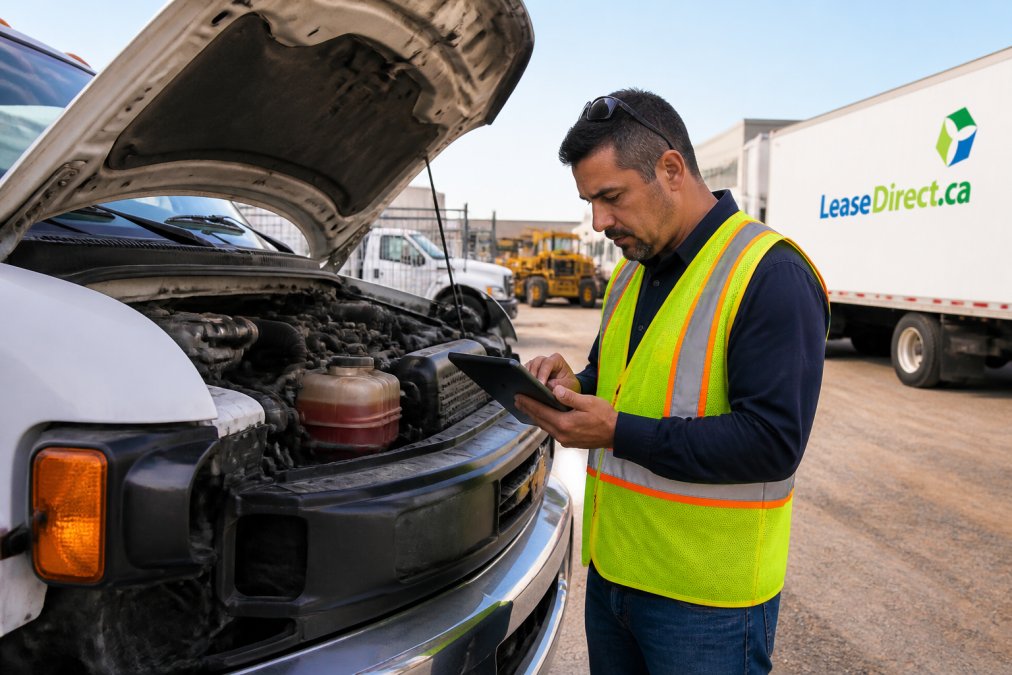
For eight-year-old assets, we need to confirm that the purchase price aligns with the equipment's actual fair market value. Using comparable listings, we help ensure you are not overpaying for a used machine. We don’t want to create a problem if the deal defaults and the asset needs to be liquidated.
What appraisals typically examine:
- Physical condition of major components (engine, hydraulics, structural integrity)
- Hours of operation or mileage, depending on asset type
- Maintenance and service history
- Comparable sales data for similar assets in the current secondary market
- Any modifications or damage that affects residual value
As noted in guidance from the Equipment Leasing and Finance Association, residual value projections for older assets require careful analysis of both asset depreciation curves and current market demand.
LeaseDirect prices older equipment lease deals differently from new asset deals, that is, we “price to risk”. The underlying cost of funds on a lease for an eight-year-old machine will typically be higher than for a comparable new asset, because there is inherently more risk involved.
Private Seller Equipment Financing: What Changes
Private seller equipment financing introduces complexity that dealership purchases do not. Most traditional lenders will not finance assets purchased from private individuals or auction, as title transfer processes, the absence of dealer warranties, and difficulty verifying equipment history create risk they are not set up to manage.
What changes when the seller is private:
- Title and lien searches are our responsibility to arrange before we finalise lease documents.
- There is no dealer warranty, so the equipment's condition documentation carries more weight
- LeaseDirect may require a third-party inspection rather than accepting the seller's representations
- Vendor financing support is not available; the financing must come entirely from our underwriters.
What stays the same:
- The credit bureau inquiry still happens
- The asset still needs to meet the our condition value requirements
- The lease structure remains the same as with dealer purchases
According to the Business Development Bank of Canada's (BDC) small business financing resources, access to flexible asset financing is one of the most commonly cited barriers for growing businesses, particularly when the asset comes from non-traditional sources.
LeaseDirect Canada, as a specialist in used and private-source assets, with a process for title verification, inspection coordination, and non-standard asset classes, is the right partner for this type of deal. Lease-to-own structures are particularly useful in private seller transactions because they give both parties clarity: the business knows the buyout option and final ownership path from day one, and LeaseDirect gains confidence in our client’s abilities to recognize good buying opportunities of solid used gear, leading to future acquisitions.
Frequently Asked Questions
Is there an age limit on equipment leasing?
LeaseDirect does not impose a hard age cut-off; the equipment's age does shape the terms you receive. Older assets attract closer scrutiny of maintenance history, residual value, and remaining useful life. Getting LeaseDirect Credit people comfortable with eight-year-old machinery will often require a formal appraisal, a shorter term length, and may apply risk-based cost of funds adjustments. A credit bureau inquiry is always part of the approval process regardless of the asset's age.
Can I lease equipment purchased from a private seller?
Yes, LeaseDirect offers private seller equipment lease financing as well as financing for acquisitions through dealers. It is not all that difficult: we require a bill of sale, proof of ownership, and occasionally an independent equipment appraisal to establish fair market value. The process takes slightly longer than a dealership purchase because the we cannot rely on a dealer's inspection records. As Specialists with many years of experience in used asset lease financing we are better placed to handle these transactions than traditional banks.
What documentation is required to lease older equipment?
Expect to provide recent business financial statements, a government-issued business registration, and bank statements covering the past three to six months. For equipment that is eight years old or more, we may also want a third-party appraisal report, maintenance and service records, and proof of insurance (more is better). A credit bureau inquiry on the business, and the principal, is standard. Having these documents ready before you apply speeds up the approval process considerably.
How does LeaseDirect determine the value of 8-year-old equipment?
LeaseDirect establishes fair market value through a combination of third-party appraisal reports, published industry guides such as the Canadian Equipment Finance Market Study benchmarks, and comparable sale data. The strength of your business and credit history determines how much we will advance against that appraised figure. Asset depreciation, remaining useful life, and maintenance history all feed into the final valuation. Equipment in excellent documented condition will always attract better terms than machinery with an incomplete service record and observed wear and tear.
Financing older equipment from private sources is genuinely more involved than walking into a dealership, but we make it workable. LeaseDirect specialises in used and private-source asset financing across a wide range of credit profiles, with flexible lease-to-own terms designed to preserve your cash flow and keep monthly payments aligned with how your business actually earns.